Sewage Smell in Your House? Long Beach Sewer Gas Diagnostic Guide
A persistent rotten-egg or sulfur odor inside your home is more than an annoyance—it indicates a breach in your sanitary plumbing barrier. Learn how hydrogen sulfide gas enters living spaces in Long Beach homes and how licensed C-36 plumbers locate and eliminate the source.
What Is Sewer Gas & Why Is It Dangerous?
"Sewer gas" is a complex toxic byproduct of anaerobic organic decomposition occurring in municipal sewer mains and private drain laterals. Its signature pungent odor stems from hydrogen sulfide ($H_2S$), accompanied by ammonia, methane, carbon monoxide, and bacterial bio-aerosols.
At low concentrations, hydrogen sulfide produces nausea, headaches, irritated eyes, and sinus pain. Prolonged exposure can cause olfactory fatigue (where you lose the ability to smell the gas even though toxic levels are increasing). Methane gas is also highly flammable in confined enclosed spaces like crawlspaces or closets.
Why Older Long Beach Homes Suffer Sewer Gas Breaches
Long Beach has thousands of historic homes built on raised pier-and-beam foundations in neighborhoods like Belmont Heights, Bluff Park, and Wrigley. Decades of coastal seismic micro-tremors and coastal sand consolidation cause uneven subfloor settling.
When a bathroom subfloor tilts even slightly, the molded wax ring shears. Water may not leak immediately, but gaseous odors escape continuously around the base. Hidden cast-iron vent pipes from the 1920s–1950s also suffer hairline stress fractures. These cracks vent sewer gas directly into living areas.
The 5 Primary Culprits of Indoor Sewer Odors
1. Dried-Out P-Traps (Rapid Evaporation)
Every plumbing fixture relies on a curved "U"-shaped pipe trap beneath the drain that holds water. During dry Mediterranean summers, unused guest sinks or tub traps lose this water to evaporation. Pouring two quarts of water down the dry fixture immediately restores the gas seal.
2. Failed Toilet Wax Ring Gasket
The toilet is bolted to a closet flange on the floor, sealed by a compressed petroleum wax ring. If your toilet rocks even slightly when sat upon, the wax seal has ruptured. Sewer gas drafts through the open floor penetration into the bathroom. Our technicians reset toilets with commercial reinforced urethane seals.
3. Cracked or Corroded Cast-Iron Vent Stacks
Plumbing vent pipes run vertically from fixtures through the roof. In mid-century homes, acidic hydrogen sulfide pools in dry upper cast-iron vents. It corrodes through pipes from the inside, letting odors filter through wall baseboards and outlets.
4. Developing Sewer Mainline Stoppage
When tree roots or heavy grease restrict your underground lateral, wastewater cannot drain promptly to the street. Stagnant sewage ferments in the pipe beneath your yard or slab, forcing high concentrations of gas up through fixture vents. Explore our Main Sewer Line Cleaning options.
5. Long Beach Water Dept (LBWD) Municipal Main Surcharging
During heavy coastal rainstorms or when municipal trunk lines down Ocean Blvd surcharge with water, positive city pressure pushes sewer gas backward up private laterals. Installing a cleanout check valve or backwater valve prevents municipal gases and backflow from entering your building.
How We Pinpoint & Eliminate the Gas Leak
Our technicians do not rely on guesswork. We deploy artificial diagnostic smoke testing, digital H2S electronic sniffer meters, and fiber-optic Sewer Camera Inspection tools. These locate hidden pipe breaches inside walls and foundations.
Call for Immediate Sewer Odor Detection: (562) 316-3598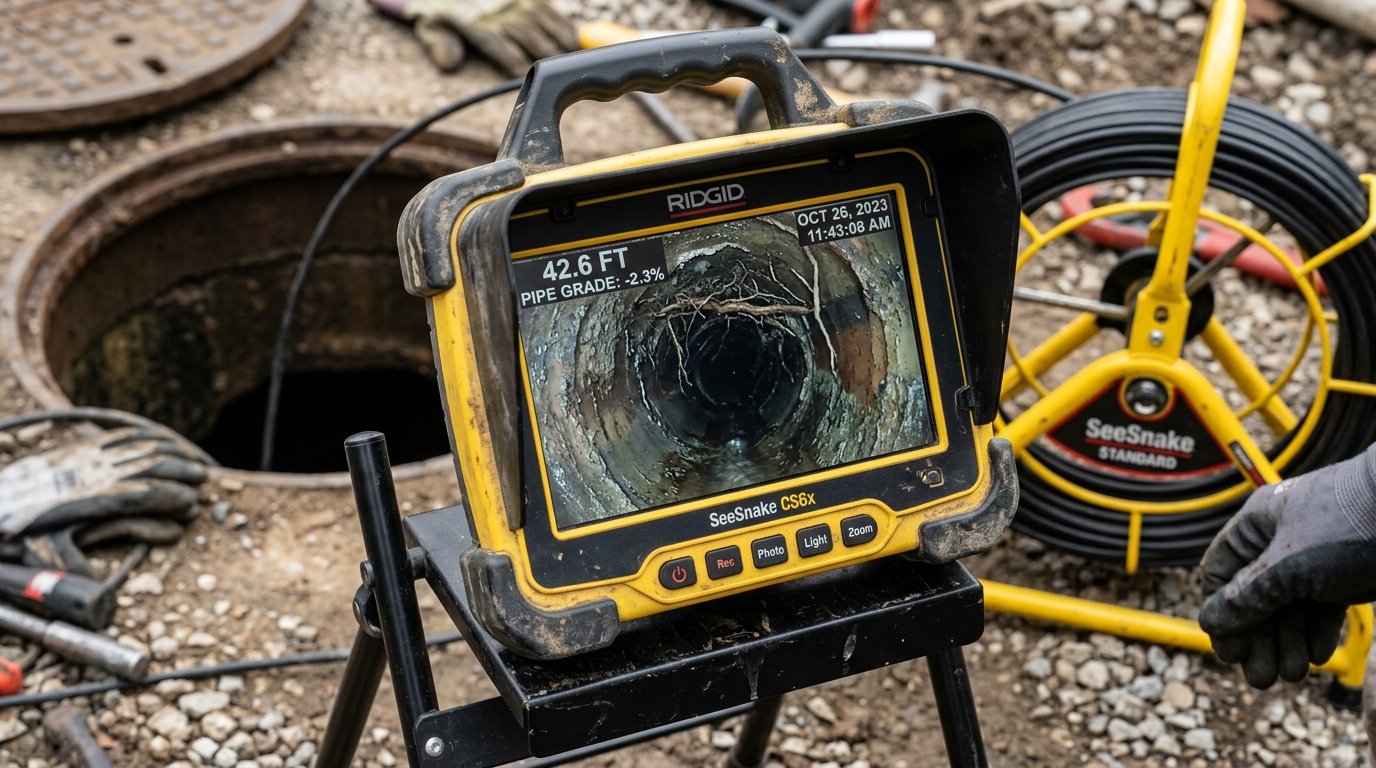
Experiencing Dizziness or Nausea?
Open windows immediately to ventilate living quarters and avoid lighting any open flames. Call our Long Beach dispatch line for emergency technician routing.
Call 24/7 Dispatch: (562) 316-3598